
View Review
CeraVe
CeraVe Hydrating Facial Cleanser
Formulated with three ceramides in roughly the same ratio your skin barrier naturally uses, so it replaces protective lipids as it cleans instead of stripping them like most foaming cleansers do.
Type at least 2 characters to search
Expert Guide
Hyaluronic acid is a humectant that draws moisture into the skin from the surrounding environment. It is commonly found in serums and moisturisers and can hold up to 1,000 times its weight in water. It suits most skin types, including oily and sensitive skin, and works well layered under other products.
Niacinamide is a water-soluble vitamin that helps with oil control, the appearance of enlarged pores, and uneven skin tone. It is generally well-tolerated by most skin types and pairs well with other active ingredients like hyaluronic acid and retinol. Concentrations of 2–5% are common in well-formulated products.
Retinol promotes cell turnover and can help with fine lines, skin texture, and uneven tone. It is one of the most well-studied skincare ingredients. Start with a lower concentration (0.25–0.5%) and use it a few times per week to build tolerance. Always use sunscreen during the day when using retinol.
Ceramides are lipids naturally present in the skin that help maintain the skin barrier. They are particularly important for people with dry or compromised skin. Products containing ceramides can help restore and strengthen the barrier, reducing moisture loss and sensitivity.
Why barrier health matters for every skin concern
Key ingredients for barrier repair: Ceramides, fatty acids, cholesterol, hyaluronic acid, niacinamide.
Salicylic acid is an oil-soluble beta-hydroxy acid (BHA) that can penetrate into pores to help dissolve excess sebum and dead skin cells. It is commonly used for clogged pores and breakouts. Concentrations between 0.5–2% are typical in over-the-counter products.
UV protection is widely considered essential by dermatologists for preventing premature ageing and reducing the risk of sun damage. Sunscreen filters come in two main types: chemical (organic) filters that absorb UV rays, and mineral (inorganic) filters like zinc oxide and titanium dioxide that reflect and scatter UV radiation. Look for broad-spectrum protection covering both UVA and UVB.
What the numbers and labels actually mean
Cause sunburn. SPF number measures UVB protection. SPF 30 blocks ~97% of UVB.
Penetrate deeper. Cause premature ageing. Present year-round, even on cloudy days.
Protects against both UVA + UVB. Look for this label on every sunscreen you buy.
Asian UVA grading system. PA++++ = highest UVA protection. Look for PA+++ or PA++++.
Apply 2 finger-lengths for the face. Reapply every 2 hours during sun exposure.
Shop the Guide
CeraVe
Formulated with three ceramides in roughly the same ratio your skin barrier naturally uses, so it replaces protective lipids as it cleans instead of stripping them like most foaming cleansers do.

CeraVe
Uses encapsulated retinol wrapped in a ceramide-friendly delivery system, designed to reduce the irritation that turns many people off retinoids entirely.
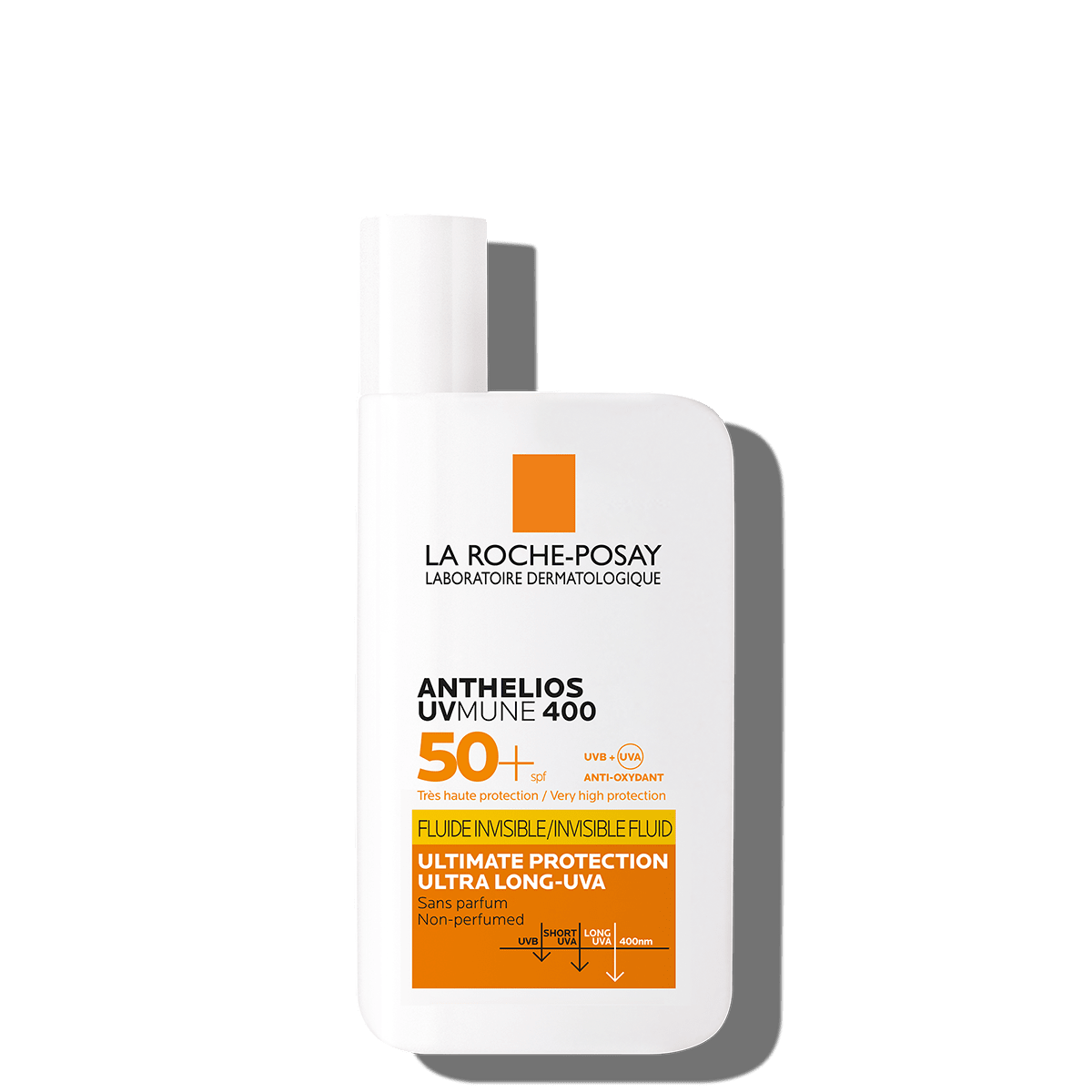
La Roche-Posay
A high-protection sunscreen featuring Mexoryl 400 providing extended ultra-long-wave UVA coverage beyond standard filters.
Continue Learning